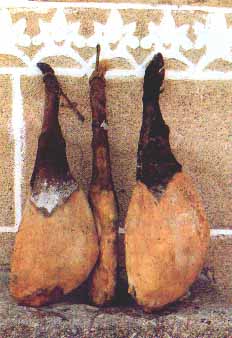
Pork from Estremadura is the pride of Spain. Until very recently the pig used to live on the acorns of the grazing lands and grew up wild, and the best pork products, ie
cured ham and sausages, came from there, such as the Montánchez ham and chorizos from every where, prepared in a thousand different ways: sour-sweet, piquant, sweet,
thick, middling, thin and twisted. Other products are larded loin, white sausage, black pudding with potatoes and pork paté from Mérida, with which half the country is supplied.
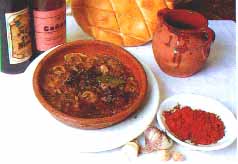
As far as stews are concerned, the people of Estremadura have few, but the ones they have are outstanding: el frite and la caldereta, prepared with lamb and baby goat respectively,
los pucheros, las migas and las gachas are also basic dishes, especially the first two, one from around Badajoz, while the other is more often found in Cáceres.
raw garlic and red peppers. It is a shepeherd's dish to be
eaten under a holm oak from an iron pot standing over some burning branches. The same goes for el frite, which is country and excursion fare. It is prepared with pieces of a lamb
yearling and fried with paprika until it turns red and leaves slight traces of olive oil on the plate.
These are festive dishes, but there are others like lamb's tail prepared in a big pot with a thick sauce which emphasizes the soft juicy texture of the tails.
And as is to be expected, pork is used for everything apart from sausages: minced meat, ears in batter and sauce, tail with tomato, lean meat with potatoes, pastorejos (slices from the
head of the animal) with fried eggs, and a kind of thick heavy soup called cachuela which is prepared with sweet breads, blood, liver and tripe of the pig. All these stews are heavy,
definitely the invention of shepherds and are meant for tough stomachs and palates for which diet is an unknown word.
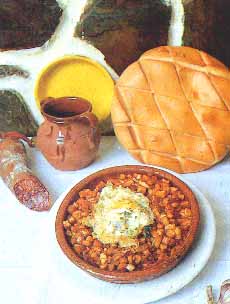
And without going beyond the old country cuisine, there is a singularly attractive dish: las migas. It is a modest one but very popular in central Spain. In Estremadura
it used to be the daily fare for a long time and there it is made with a magic touch. To begin with, bread is soaked in water and then fried with pieces of bacon and dry peppers. It is
no longer an everyday dish, but if ordered in advance, it is prepared as well as ever in any restaurant.
El gazpacho extremeño consists of a soup with pieces of tomato which are not liquidized like the rest of the components. Then onion is added, which is never found in the
Andalusian variety. Another dish is called sopas engañadas, which consists of pepper, onion shoots in vinegar, figs and grapes and is an original and strange mixture.
Some dishes are made with fish: el ajo de peces de río (lit.: garlic with river fish) is typical for the area around Badajoz. It is like a gazpacho with fish because it is
boiled with a lot of mashed garlic, which is similar to the way gazpacho is prepared. And there are some marvellous cod dishes prepared with recipes from the convents: el recado de patatas,
with potatoes in batter and a sauce accompanying the fish, and el bacalao del convento,
which consists of potatoes, spinach and some broth. Frog legs are also very popular. They are fried in a batter or served in a tomato sauce.
With regard to desserts, the fruit from the Don Benito area is outstanding, especially that from the Jerte valley, where a lot of cherries are grown.
The pastry is typical of a rural cuisine, ie flour and lard are used freely. There are rocas de candelilla, bollos de chicharrones, escaldadillas (made with dough
soaked in orange juice and then fried), empanadas de bizcocho, bollos de leche, huevillos...
Estremadura has some good wines, but they are not yet commercialized. They are extremely strong and have a high alcohol content, as well as an unmistakable flavour. The wine from
Cañamero is only now finding its way on to the market. There are also whites from Montánchez, Cillero, Ahigal; and light reds from Hervás...
 Spanish Cooking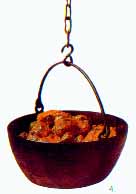

 Back to Spanish Cooking